
सुबह का दर खुला, मगर कोई आहट न आई,
तेरी ख़ामोशी दिन भर मेरे साथ चली आई।
ऑनलाइन की रौशनी में तेरा पता ढूँढ़ता रहा,
अपने ही ख़यालों से तेरा जवाब पूछता रहा।
फिर एक तस्वीर आई, सन्नाटा ज़रा-सा हिला,
छह दिन से बंद दिल में कोई छोटा-सा दर खुला।
And Then What?
She had left me with a question that refused to leave me alone.
Why?
For the first few days, that was all I could think about. I kept returning to our last conversation, reading her words in my mind, trying to understand how something that had felt so warm could end so abruptly.
“I’m glad we had the opportunity to meet.”
And then, just a little later:
“Do not msg me. Bye.”
How could the same person say both things within such a short span of time?
I had not expected her to stay at the activity centre forever. I knew her visit to her parents’ home was temporary, and I had always understood that one day she would return to her own city. I had even tried to prepare myself for that possibility.
But I had imagined a different kind of goodbye. Perhaps a few more conversations. Perhaps an occasional message. Perhaps the comfort of knowing that, even though we would no longer see each other every morning, we could still remain a part of each other’s lives.
I had never imagined that she would ask me not to contact her at all.
And so I began searching for an explanation.
Had I said something wrong? Had my suggestion that we stay in touch made her uncomfortable? Had she changed her mind about me? Or had something happened after she left that had nothing to do with our conversations themselves?
My mind moved restlessly from one possibility to another. I wanted an answer, but every answer I imagined gave rise to another question.
The Possessive Husband
Then I remembered something she had told me on the day she finally opened up.
Her husband, she had said, was quite possessive.
At the time, I had listened without asking too many questions. She had been sharing things that were clearly difficult for her, and I had not wanted to turn her vulnerability into an interrogation.
Now, those words returned to me with a different weight.
What did she mean by possessive? Was it ordinary jealousy, or did it extend to the decisions she could make, the places she could visit, and the people she could speak to?
I did not know. I remembered her describing the contrast between her husband’s freedom and her own restrictions. He could go wherever he wanted, whenever he wanted, while she had felt unable to make even ordinary choices for herself.
My thoughts began to race. Could this have something to do with why she had told me not to message her? Had someone objected to our conversations? Had something changed after she left?
These were possibilities, not facts. I had no evidence that her husband or anyone else had intervened. Our conversations had felt open, respectful, and ordinary to me, but that did not tell me what might have happened in her life after she went home.
Still, my mind kept trying to connect the fragments I had been given. I wondered whether she was living with restrictions I could not see, and I felt distressed by the possibility. I had come to know her as thoughtful, warm, and considerate. It was hard to imagine someone I respected feeling unable to choose how to spend her own time.
The more I thought about it, the more I had to remind myself that concern did not give me knowledge. I could not know her circumstances from a few conversations, and I could not turn my fears into her story.
But I was already deeply caught up in the questions.
Careful!
One sentence kept returning to me:
“I’m glad we had the opportunity to meet.”
An opportunity.
We had been strangers when we first met. We had not planned to find each other. There had been no special reason for our paths to cross beyond the ordinary routines of our children’s lives.
And yet, by the time she left, our conversations had become something I looked forward to every day.
I wondered whether they had meant something to her too. Had she looked forward to seeing me in the mornings? Had our conversations brought her the same little moments of freshness she had told me about? Had she found comfort in speaking to someone who listened without judging her?
I remembered her telling me that she liked talking to me, that she felt comfortable sharing things with me, and that she could speak without feeling manipulated or hurt. Those words had mattered to me when she said them. Now, they mattered even more.
Perhaps I was searching for reassurance in memories that could no longer answer me. Perhaps I was giving her words a meaning she had never intended. I knew there was a danger in interpreting every sentence according to what I wanted to believe.
I could not know whether our meeting had felt like an opportunity to her in the same way it had to me. I could only wonder. The thought made me feel both closer to her and more helpless.
I could not know what she was experiencing. I could not know whether she missed our conversations, or whether she was thinking about me at all. Yet I found myself hoping that somewhere in her day, a memory of our time together might bring her a smile.
I had no way of knowing. I only wanted to believe those mornings had not existed only in my memory.
She Was No Longer Just Someone I Had Met
Before her, I had known that people carried invisible burdens. I had my own struggles and responsibilities, and I knew that everyone was fighting battles others might never see.
But knowing that people struggle and caring deeply about one particular person are two very different things.
Somewhere between our conversations, she had become that particular person for me.
I had begun to notice her absence even before she left. On mornings when she did not appear at the activity centre, I would find myself looking around, wondering whether she would come. I would notice the space where she might have been and feel a quiet disappointment when the morning passed without seeing her.
At the time, I had not fully understood what that meant. Now, with her suddenly absent from my life, those little moments seemed to reveal how much she had come to matter.
I missed the anticipation of seeing her. I missed the easy conversations that could begin with something ordinary and gradually wander into more personal territory. I missed the feeling that, for a little while each morning, I had found someone with whom I could speak without having to force the conversation.
And I missed her.
Not merely the idea of her. Not simply the attention she had given me. I missed the woman whose personality had drawn me in, whose honesty I admired, and whose inner world I had only begun to discover.
I worried about her, too. I wondered whether the things she had told me were only a small part of what she was experiencing. I wondered whether she had people around her with whom she could speak as freely as she had spoken with me.
I could not rescue her from circumstances I did not understand, and I could not assume that she wanted me to intervene in her life. But I wished things were easier for her. I wished she could make her own choices and live without feeling that every decision belonged to someone else.
And, selfishly, I wished she could still talk to me.
I could not pretend that one wish cancelled out the other. I cared about her well-being, and I missed the place I had begun to occupy in her days. Both feelings were real.
Six Days of Looking for Her
The first few days passed slowly.
I went about my routine, attended to my responsibilities, and tried to convince myself that I should accept her message for what it was. But my mind kept returning to her.
Eventually, my longing took a form I had not expected. I began checking WhatsApp more often than usual.
At first, I told myself I was simply checking whether she had come online. Then I found myself noticing when she appeared active, wondering how long she stayed online, and checking again later to see whether anything had changed.
I was not looking for a way to contact her. I knew she had asked me not to message her, and I was trying to respect that boundary. I was looking for a sign: a small indication that she was still there, somewhere beyond the silence between us.
If I saw her online, I wondered what she might be doing. Was she talking to her family? Catching up with friends? Simply scrolling through her phone before going to sleep?
And sometimes, the question that mattered most would slip into my mind.
Was she thinking about me?
I knew that a green dot beside someone’s name could not answer that question. Online activity was not evidence of longing, affection, or regret. Still, I kept looking.
I began to suspect that she might be paying attention to my WhatsApp activity too. Perhaps I noticed her online around the times I was. Perhaps I saw patterns that made me wonder whether she checked when I appeared. I could not be certain. There was no way to know what she was thinking simply by observing when she used an app.
But the possibility stirred something inside me.
What if she is looking for me too?
The thought brought a strange mixture of hope and sadness. If she really was checking my activity, what did that mean? Was she curious about me? Did she miss our conversations? Was she wondering whether I had accepted her request and stopped trying to reach her?
Or was I simply seeing what I desperately wanted to see?
I had no answer. Yet I kept returning to the same small screen, searching for a clue that might tell me something about a person who had become so important to me.
Looking back, I can see how uncertainty had begun to occupy the spaces where our conversations used to be. When we were talking, I could hear her words and respond to what she actually said. Now, with no words to interpret, I was trying to make sense of silence.
And silence can be made to mean almost anything when the heart is desperate for an answer.
The Void
She had been part of the way my mornings began. Now I woke up with the memory of her instead.
There was no message to look forward to, no possibility of a casual conversation, no familiar presence at the activity centre. The day continued as it always had, but something in my routine felt strangely incomplete.
I found myself remembering her voice, her expressions, the way she laughed, and the little details of our conversations that had seemed ordinary at the time.
How strange it is that we do not always recognise the importance of a moment while we are living it. A conversation ends, and we assume there will be another. Someone says goodbye, and we expect to see them again. We become accustomed to a person’s presence without realising how deeply it has entered our everyday lives.
Only when it disappears do we begin to notice the spaces it used to fill.
For six days, I lived with that absence. I missed her. I worried about her. I questioned myself. I imagined explanations and then questioned those explanations too.
Some moments, I felt hurt by what she had done. At others, I worried that she might be trapped in circumstances I could not begin to understand. Sometimes, I was simply lonely for the easy companionship we had shared.
My feelings were not neat or orderly. They did not arrive one at a time, politely waiting for me to understand them. They overlapped, contradicted one another, and left me emotionally exhausted.
Six days.
It felt like a drought after a season of unexpected rain. And I had no idea when, or whether, the rain would return.
The Message
Then, one day, my phone lit up.
A WhatsApp notification appeared. I looked at the screen. It was from her.
For a moment, I simply stared at her name. After six days of silence, even seeing it there again felt significant. I had spent so much time wondering whether she would ever contact me that the sight of a new message seemed to suspend everything else around me.
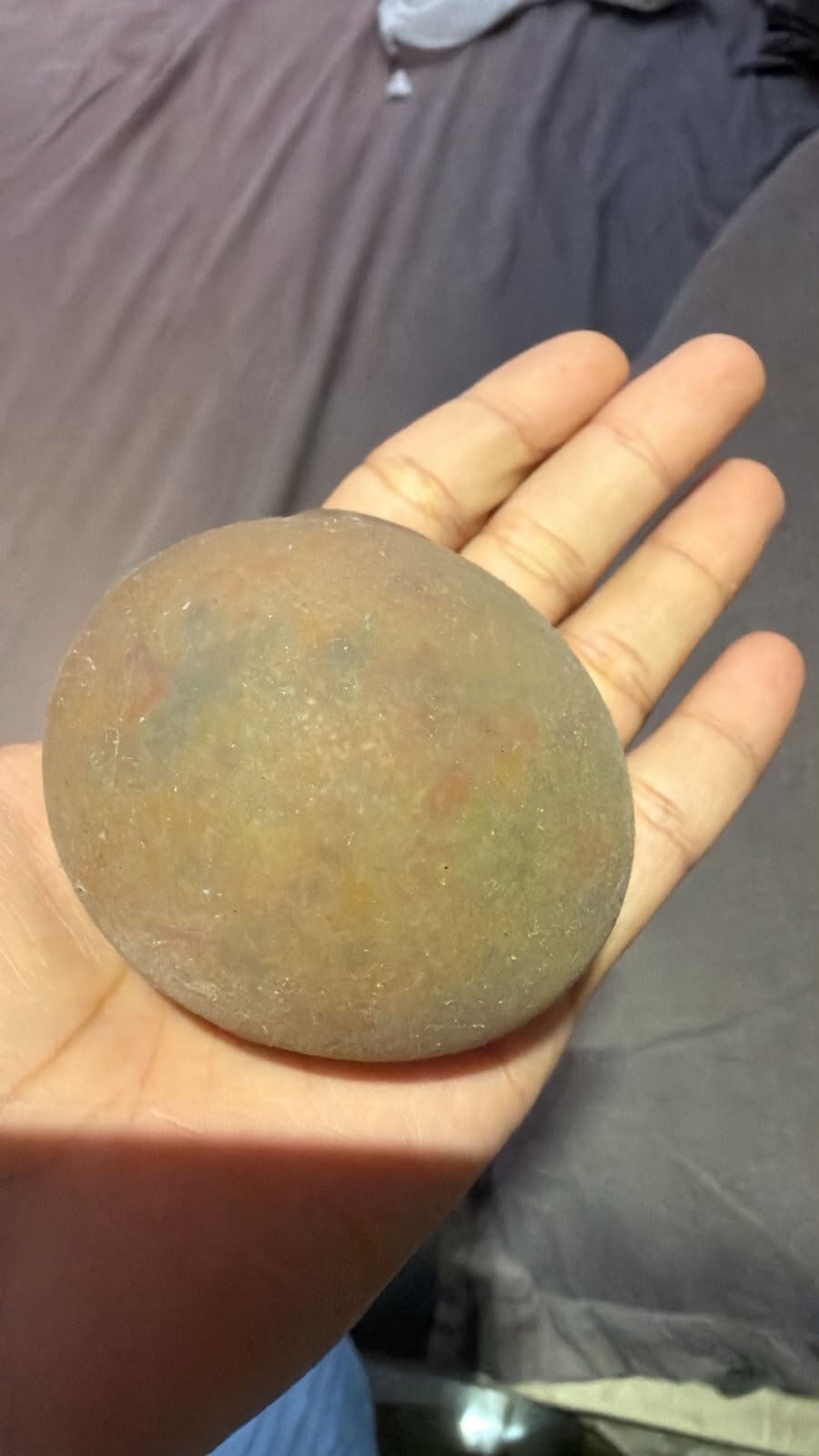
There was an image attached.
She was holding a ball.
Her: I still have that ball.
I read the words again. There was no explanation attached to them, no answer to the questions I had been carrying. I did not know what had led her to send the photograph or what she meant by it. I only knew that, after six days, she had written to me again—and that she still had the ball.