The Forbidden Territory

An intimate digital edition

The Forbidden Territory

A secret between two souls, told in chapters. Turn the pages slowly, or read each story in its original, uninterrupted form.

Use the arrows or your keyboard to turn pages. On a phone, swipe to read.

Introduction and stories

Introduction: A Secret Between Two Souls

The Forbidden Territory is a story about two souls drawn towards each other despite the distance, differences, and gaps that stand between them.

A Secret Between Two Souls

What we share goes beyond ordinary love. It is a deep emotional connection filled with unspoken feelings, unanswered questions, hidden desires, fears, and moments that bring us closer in ways we cannot always explain.

There are huge gaps between us. Perhaps we are not even trying to bridge them. And yet, somehow, we keep finding our way back to each other. Why does this happen? What keeps drawing us closer? We may not have all the answers. Perhaps some connections are not meant to be fully understood.

Is there a desire to be physically close? Maybe. But what we long for goes much deeper. We long for emotional closeness, understanding, presence, and the comfort of knowing that, despite everything that separates us, we share something meaningful.

The Stories We Kept Within

For a long time, our stories remained within us. The words we never said, the feelings we struggled to understand, the moments we treasured, and the emotions we could not explain became part of our private world.

Now, through The Forbidden Territory, we are opening a small window into that world.

Here, we share stories of forbidden love, emotional longing, unspoken desires, complicated connections, fear, vulnerability, and the beautiful uncertainty of being drawn towards someone who may exist beyond the boundaries of our everyday lives.

These are not just stories about love. They are stories about two people, their thoughts, their circumstances, her fears, my desires, our emotions, and the invisible thread that continues to bring us closer.

Why This Territory Exists

The Forbidden Territory exists because some feelings are too deep to remain unspoken forever.

Our thoughts give it meaning. Our situations shape it. Her fears and my desires give it tension. Our love and emotions give it life.

We do not claim to understand everything that happens between us. We are simply choosing to put our experiences into words and share them with the world.

Perhaps you will see parts of your own story in ours. Perhaps you, too, have experienced a connection that is difficult to explain, a longing that refuses to fade, or a feeling that exists somewhere between what is possible and what must remain unspoken.

If you have, you may find a little piece of yourself here.

Welcome to The Forbidden Territory — a secret between two souls, a world only they understand.

Chapter One: The First Time I Saw Her

It was at a children’s swimming pool, the kind filled with loud conversations, splashing water, and an open sky. It was April, and the summer holidays had brought children in droves. April in India is brutally hot, and the pool was crowded with kids eager to escape the heat.

The air was thick with the smell of chlorine and warm concrete. Parents occupied the steps and benches around the pool, some chatting among themselves, others keeping a close eye on their children. The instructors moved from one group to another, their voices rising above the constant noise of splashing and laughter.

Nothing about the place invited romance or grand revelations. It was an ordinary morning, much like the others that had come before it.

I was simply sitting there, waiting for the swimming batch to end, reading a book. The sessions lasted forty-five minutes, and I had made a habit of spending that time with my favourite books in the mornings. It was a small pleasure I had come to look forward to. While my son learned to swim, I could disappear into another world for a little while.

Then I heard her for the first time.

She was asking her child to kick properly. He was the youngest one in the pool, and it seemed he was too young to follow the instructor’s directions. So she was adding a little of her own motherly guidance to the lesson.

Her voice wasn’t loud or sharp. She wasn’t shouting over the noise. There was an easy, instinctive patience in it, a warmth that seemed to cut straight through the chaos. I looked up.

I’m not someone who stares at women. When I’m absorbed in a book, I barely notice what’s happening around me. Looking up at her felt strangely intrusive, even to me. Yet I couldn’t seem to return my attention to the page.

She wasn’t dressed to attract attention, nor was she trying to impress anyone. She was simply there, entirely present with her child. And yet, there was something about her that held me.

A quiet gravity.

Something in the way she moved, as though she carried an entire private world behind her eyes and revealed only what was necessary. I found myself looking at her again and again, trying to understand what made her different.

I wondered whether it was her voice, the way she spoke to her child, or something I couldn’t quite put into words. Perhaps it was the contrast between the noisy surroundings and the calmness she seemed to bring with her. Whatever it was, I couldn’t explain it to myself.

Every mother is caring, of course. I knew that. But there was something more to her, something I couldn’t have named then. I would come to understand it much later. She was strong on the outside, yet broken in ways I could not see. And still, she had the courage to keep going, to raise her children, to find within herself the strength they needed.

I didn’t know any of that at the time. I only sensed that there was something extraordinary about her.

I knew almost instantly that she was married. There were the obvious signs, but even without them, reality rarely leaves much room for confusion. She had a life, a family, and no reason whatsoever to look in my direction.

I didn’t know her. I knew nothing about her life, her struggles, or the person she was when nobody was watching.

And that was precisely what made the moment so strange. I was drawn to someone whose existence was entirely separate from mine. She was a stranger, and yet, for those few minutes, my attention had settled on her as though it had found something it had been searching for without knowing it.

I sat there with my book in my hands, wondering whether there was any normal, non-creepy way to say hello. There wasn’t. What would I have said, anyway?

"Excuse me, your voice caught me off guard"?

The thought was absurd. You don’t interrupt a stranger’s morning because your chest suddenly feels hollow.

I looked back at my book, but the words had lost their meaning. I read the same sentence more than once without understanding it. Every now and then, I glanced up, almost hoping to find some explanation in the way she spoke or moved. There was none.

So I stayed where I was and watched the clock run out.

Ten minutes later, the batch ended. The children began making their way out of the pool. Parents gathered their belongings, called out to their kids, and helped them change. The ordinary rhythm of the morning resumed.

Her son got changed, took her hand, and they walked towards the exit. I started getting my own son dressed. She disappeared into the crowd in the parking lot, entirely unaware that someone twenty feet away was still trying to steady his breathing.

I put my book in my bag, grabbed my keys, and drove home with my son.

The drive was familiar. The roads were busy, the afternoon heat was building, and my son was occupied with whatever children think about after swimming lessons. I tried to return to the ordinary details of the day, to the errands and responsibilities waiting for me.

That should have been the end of it. In an ordinary life, a stranger remains a stranger. Whatever you imagine in a ten-minute window dissolves into traffic, errands, and the routines of the day.

But it didn’t dissolve.

And somewhere between the swimming pool and home, I realised that I was carrying the memory of someone I had never met.

Open this chapter as a regular story page →

Chapter Two: The Girl in the Black Hijab

पहचान का एक धोखा था, बातों का सिलसिला बन गया,

एक अनजाना चेहरा धीरे-धीरे अपना बन गया।

सुबह की उन बातों में अपनापन उतरता रहा,

हर छोटा-सा लम्हा कुछ अनकहा कहता रहा।

काले हिजाब के पीछे मुस्कान की रौशनी थी,

पहचान से परे भी एक जानी-पहचानी-सी कड़ी थी।

The next morning, I found myself sitting in the same spot where I had sat the day before.

Perhaps it was a coincidence. Perhaps a small part of me hoped to see her again. I wouldn’t admit it to myself just yet, but I was already looking forward to another glimpse of the woman whose voice had stayed with me long after our brief encounter.

I pretended to read my book, but honestly, I couldn’t focus.

And then, she arrived.

She took a seat beside me, accompanied by two children. My heart, which had been going about its business quite normally until that moment, seemed suddenly delighted with the arrangement.

I was smiling inside.

She was sitting right next to me, and yet I had absolutely no idea how to begin a conversation.

The children soon went off to the pool, leaving us sitting beside each other. I wanted to speak to her, but there was no obvious reason to start a conversation. We were still strangers, after all. I couldn’t simply turn towards her and tell her that her voice had been ringing in my ears since yesterday.

Fortunately, breaking the ice has never been particularly difficult for me.

I put my book in the bag, as though preparing for a long conversation. Then I cleared my throat and looked toward the youngest child, the one I thought I recognised from the previous day, and asked her how old he was.

“He is five,” she replied, “but he isn’t my son.”

I paused.

What?

Yesterday, I had heard this very voice calling a child with such tenderness. I had been captivated by the warmth I thought I heard in a mother’s voice. And now, the woman sitting beside me was telling me that the child wasn’t hers.

I was having a conversation with myself.

Wait a minute. If he isn’t your son, then who were you calling yesterday?

My curiosity got the better of me.

“Then whose son is he?” I asked.

“He’s my sister’s son,” she replied.

And just like that, my little world of assumptions came tumbling down.

I was talking to the wrong woman.

The woman sitting beside me was her sister. The little boy was her sister’s son. The older child was hers.

Both sisters wore black hijabs and burqas. They had similar complexions and remarkably similar builds. To my inexperienced eyes, they looked almost identical. I had mistaken one for the other without the slightest suspicion that I could be wrong.

You must admit, it was an honest mistake.

Still, I couldn’t help laughing at myself. I had spent the previous day being fascinated by one woman, only to approach her sister the next morning with all the confidence of someone who knew exactly whom he was looking for.

Apparently, I knew nothing at all.

But the conversation continued, and it turned out to be a pleasant one. We spoke about their families and why they were visiting their parents. Both sisters were married and lived in different cities. They had come to their parental home to spend some time there during the vacation.

It was a good conversation, even if it wasn’t the one I had been hoping for. The session ended as usual, and we left with our children.

And the funniest part?

My little adventure in mistaken identity wasn’t over yet.

The following morning, I met her again.

This time, I was determined not to repeat my mistake. I pointed to the older child and asked about him, assuming he was her son, only to hear the familiar correction.

“He isn’t mine.”

I nearly laughed out loud.

Not again!

For a moment, I wondered whether I had somehow managed to find the wrong sister for a second time. But no, this time I was speaking to the woman I had wanted to meet.

The bells began ringing in my ears again.

I told her that I kept getting confused between her and her sister.

She laughed.

“Everyone does,” she said.

Apparently, their resemblance had been fooling people for years.

And so, with a little laughter and a rather embarrassing story to tell myself, our conversations began.


Day after day, we found ourselves talking more.

What began as an occasional exchange gradually became something I looked forward to. We would sit together in the mornings and talk about all sorts of things. Sometimes the conversations were lighthearted; sometimes they gave me a glimpse of a world different from my own.

She was a Muslim woman. I was a Hindu man.

She was married. So was I.

We came from different religious and cultural backgrounds, and we each had our own families, responsibilities, and commitments.

Yes, now you understand the gap.

It wasn’t just the distance between two strangers sitting beside each other at a swimming pool. Our lives had been shaped by different traditions, and both were already intertwined with other people.

And yet, we talked.

She never seemed uncomfortable speaking with me. She spoke freely, and I listened with genuine interest. Through her, I began to understand more about her culture and traditions. I found it fascinating to learn about another person’s world through ordinary conversations rather than books or explanations.

But it wasn’t merely her culture that drew me towards her.

It was the person she seemed to be.

She came across as honest and transparent, bold in her manner, and dignified in the way she carried herself. There was a strength about her that I admired. She didn’t need to do anything extraordinary to command my respect.

I began to like her.

I thought she enjoyed our conversations, too. She would talk, laugh, and share things about her life. Whether she felt the same affection I was beginning to feel, I couldn’t say. I knew better than to mistake friendliness for something more.

I only knew how I felt.

I found myself remembering things she had said and looking forward to seeing her the next morning. I enjoyed her company, her voice, and the way she could make an ordinary morning feel different.

I found her genuinely adorable.

My feelings for her weren’t about reducing her to her appearance or treating her as an object of desire. I admired her as a person. I wanted to know her better, to sit beside her a little longer, and to hear what she had to say.

We were both married, and that mattered. I respected her and wanted to be careful with my words and actions, and with the space I occupied in her life.

I simply wanted to know more about the person behind that black hijab and the warm voice I had noticed on the very first day.


Soon, entering the pool area became a different experience altogether.

My eyes would instinctively search the area for the familiar black hijab.

Was she there?

Had she arrived yet?

And, most importantly, was it her or her sister?

That last question had become rather important.

In the beginning, I would look carefully, trying to distinguish one sister from the other before allowing myself the pleasure of recognition. Eventually, her sister stopped coming, and things became easier. I no longer had to solve the mystery before I could smile to myself.

If she was there, the morning felt complete.

If she wasn't, something seemed missing.

A day without seeing her was one thing. But when a day turned into two, I would feel an emptiness I couldn’t quite explain.

It wasn’t that anything had happened between us. We hadn’t made promises, exchanged phone numbers, or agreed to meet every morning. We were simply two people who had grown accustomed to talking.

And yet, I had begun to notice her absence.

I didn’t even have her mobile number. There had been no reason to exchange numbers. Our conversations belonged to that swimming pool, to those mornings when we happened to sit beside each other.

When I left the place, our conversations remained there, too, at least until the following day.

Perhaps that was part of what made them so precious. There were no messages to wait for, no calls to anticipate, no expectations to negotiate. Just the possibility of seeing her, sitting beside her, and talking for a while.

At least, that was how it seemed then.


But there was something else I had begun to notice.

Something in her eyes.

Every now and then, beneath her confident manner and willingness to talk, I sensed a depth I couldn’t quite reach. There seemed to be something she wasn’t saying, something that remained just beyond the boundaries of our conversations.

I couldn’t have explained what it was. She hadn’t shared anything that would have given me the right to draw conclusions.

It was only a feeling.

Sometimes, I wondered whether there was a sadness hidden somewhere behind those eyes. A quietness that didn’t always find its way into words.

I wanted to ask her.

But wanting to ask a question and having the right to ask it are two very different things.

We were becoming comfortable with each other, but we weren’t yet close enough to share everything. There were still parts of our lives that belonged to us alone, and I respected that distance.

So I didn’t ask.

I let the conversations unfold at their own pace. I listened when she spoke, laughed when she laughed, and enjoyed the time we spent together without demanding access to the parts of her life she hadn’t chosen to reveal.

I didn’t know then that the feeling I had noticed in her eyes would eventually become something I would understand more deeply.

I didn’t know what she was carrying within herself, or how much of her story remained hidden from me.

All I knew was that I liked having her around.

I was drawn to her honesty, her confidence, her warmth, and the quiet dignity with which she seemed to navigate the world. And perhaps, without realising it, I had begun to look forward to more than our conversations.

I had begun to look forward to her.

I still didn’t know what this growing attachment meant. I had no name for it, no plan for it, and no idea where it might lead.

For the moment, I was content with the small world we had created between two seats at a swimming pool.

Two married strangers.

Two different faiths.

Two lives that had no obvious reason to move closer.

And a connection neither of us had yet attempted to define.

I had started by mistaking her for someone else.

Somehow, I was beginning to feel that I wanted to know who she really was.

Open this chapter as a regular story page →

Chapter Three: The Secrets Her Eyes Kept

शायद उसकी आँखों में कुछ था, शायद मेरा ख़याल,

मैं समझ न पाया, बस रह गया एक सवाल।

लफ़्ज़ों में सब सहज था, चेहरा भी मुस्काता था,

फिर भी कोई पल था जो मन में ठहर जाता था।

मैं अर्थ खोजता रहा, पर यक़ीं कर न सका,

वो क्या महसूस करती थी, मैं जान न सका।

Initially, our conversations were about ordinary things. The kind of things two people might talk about while sitting together in the morning, waiting for their children to finish their batches.

We talked about the kids’ education, our families, traditions, books I had read and all sorts of things that usually come up when people are simply passing time.

But gradually, something changed.

We started talking about things that were a little more personal. Nothing particularly intimate, but certainly more than two casual acquaintances would normally share.

I could feel the distance between us shrinking. We were becoming more comfortable with each other, one conversation at a time. And I was beginning to look forward to those conversations.

Later, she confirmed that she enjoyed my company too. So it wasn’t just me finding something special in those mornings. We both enjoyed being there.

She would tell me about different aspects of her life, although there were certain things she preferred to keep to herself. Whenever a conversation came close to something that might be troubling her, she would often leave it there.

For instance, she had mentioned more than once that she didn’t let her children hang out with her husband because she didn’t trust him to look after them. There was clearly more to that story, but she never went into the details.

I didn’t ask.

On the surface, everything seemed perfectly fine.

She smiled, laughed and spoke with a confidence that I found quite attractive. There was an ease about her that made it difficult to imagine she might be dealing with anything unpleasant.

And yet, sometimes, I noticed something in her eyes.

I cannot explain exactly what it was. Whenever she spoke about certain personal matters, her expression would change. There was a sadness that occasionally slipped through, almost as if her eyes were saying something her words weren’t.

I didn’t know her well enough to understand what was happening in her life. But looking back, I feel she sometimes wanted to talk about things she had been keeping inside. Perhaps she simply needed someone who would listen.

I would notice those little changes, wonder about them and then let the conversation move on.

We were still strangers, after all.

Strangers who enjoyed each other’s company in the mornings. Strangers who had started sharing little pieces of their lives, but hadn’t yet reached the point where either of us could speak freely about everything.

I wasn’t going to push her.

And so, I continued enjoying our conversations, even as my curiosity about her grew.

Looking back, I sometimes wonder whether I was genuinely sensing something or whether my growing attachment had simply made me more observant. Perhaps a little of both.

I cannot say for certain.


There was another reason our mornings started getting longer.

Our children had begun getting along rather well.

Once their scheduled batches ended, they would often continue playing together. Getting them out of the pool was becoming a task in itself. They always wanted a few more minutes.

And those few extra minutes gave us more time together.

It was rather amusing. The children were busy building their own friendship, completely unaware that they were also bringing their parents closer.

Sometimes, the simplest things bring people closer.

A few extra minutes turned into longer conversations. Those conversations gradually became a familiar part of our mornings.

Before I realised it, seeing her had become one of the things I looked forward to most.

She was no longer just the woman in the black hijab whose voice had caught my attention on the first day.

I was getting to know her.

I liked her confidence, the way she spoke and the fact that she didn’t seem to believe in unnecessary pretence. She valued transparency and seemed comfortable being herself.

I admired that about her.

But there was something I couldn’t quite understand.

How could someone so open about so many things be so guarded about certain parts of her life?

Of course, I knew there was no real contradiction in that. Being honest doesn’t mean telling everyone everything. Everyone has a private world, and perhaps hers was a little more protected than I had imagined.

Still, I wanted to know more.

Not just about the cheerful woman who sat beside me every morning, but about the person behind that smile. What made her happy? What bothered her? What were the things she kept to herself?

I wanted to know the woman behind those eyes.

I wanted to dive a little deeper into her heart.

I had no idea how much that desire would eventually affect me.


One day, I asked her when she and her children were planning to return to their city.

They had been staying at their parents’ home for some time, and I naturally assumed their stay would eventually come to an end.

Her answer was simple. They could leave anytime. Her husband might arrive at any moment to take them back.

But something about the way she said it caught my attention.

Her expression changed ever so slightly. There was a little hesitation, a difference in her body language and something in the way her words came out.

It was brief. Probably something most people wouldn’t have noticed.

But I did.

I wondered whether I had touched upon something she wasn’t comfortable discussing.

Was she unhappy about the possibility of returning? Was there something about going back that she didn’t want to talk about?

I had my suspicions, based on a few things she had told me earlier. But suspicions are not facts, and I wasn’t going to turn a fleeting expression into a story of my own.

So I didn’t pursue it.

I let the conversation move on, although her response stayed somewhere in the back of my mind.


A month passed.

A month since I had asked her when she would be returning to her city.

And she was still there.

Our mornings continued much as before. We would meet, talk, laugh and watch the children play after their activities.

I had initially thought her stay would be a short one. Every time I remembered her mentioning that her husband could arrive anytime, I imagined that our conversations might soon come to an end.

I had even started imagining what those mornings would feel like without her.

But the days kept passing, and she was still around.

And she was still there.

I didn’t know why her stay had been extended. Perhaps there were family circumstances, perhaps something else had changed. I never really asked.

All I knew was that I was happy to have more time with her.

Those extra mornings meant more conversations, more laughter and more opportunities to know each other.

I began to feel that I had been given something I hadn’t expected.

Not a promise of anything. Not some grand sign from the universe.

Just more time.

And, somehow, that time had started becoming precious to me.


There is something I hadn’t quite admitted to myself until then.

As our conversations became longer and the children grew more comfortable playing together, there were moments when we would almost lose track of everything around us.

The activity centre would become quieter. The children would be busy with their games, and we would carry on talking.

It was during one of those moments that I realised I wanted to kiss her.

I wanted to kiss her.

Not on the lips. I wasn’t imagining some elaborate romantic moment.

I wanted to kiss her on the cheek.

A simple gesture, perhaps. But the feeling behind it wasn’t quite so simple.

The thought surprised me. Until then, I had been happy admiring her, enjoying her company and looking forward to our conversations. I hadn’t really thought about expressing my feelings through physical affection.

Now I was.

I wanted to kiss her cheek so badly that I had to remind myself where I stood.

She was married and so was I. I respected her, and I had no reason to assume that she would welcome such a gesture. Enjoying someone’s company and sharing personal conversations doesn’t automatically mean that they want anything more.

And yet, I didn't act on it.

I didn’t ask, and I certainly didn’t act on it.

But the feeling didn’t disappear.

Something had changed in me. I was no longer just fond of an interesting person. I was becoming emotionally attached to her, and I was beginning to realise it.

I started remembering little things about our conversations. The things she had said, the way her expression changed when certain subjects came up, the occasional sadness in her voice.

I found myself going back to those moments and connecting them in my mind.

And one question kept returning.

Was she going through difficulties in her marriage?

I couldn’t say that she was. She had never told me enough to make such a conclusion. But some of the things she had shared, particularly her reluctance to leave her children alone with her husband, had left me wondering.

Perhaps there was a reason behind the sadness I thought I saw in her eyes.

Perhaps the cheerful woman who sat beside me every morning was dealing with things she didn’t know how to share.

Or perhaps I was reading too much into everything.

I honestly didn’t know.

What I did know was that I was becoming increasingly interested in the person she was beyond our morning conversations.

I wanted to understand her. I wanted to know what made her the person she was, what she had been through and what she was keeping to herself.

I had started paying attention to her in ways I hadn’t expected.

I thought about her when she wasn’t around. I remembered conversations long after they had ended. Sometimes, I would find myself wondering what she might be doing or whether something I had said had stayed with her too.

It was no longer just about looking forward to seeing her the next morning.

She had started occupying a space in my thoughts even when she wasn't there.

I had admired her confidence, enjoyed her company and respected the little she had chosen to share with me.

Somewhere along the way, my curiosity had become something much stronger. Perhaps even an obsession.

I didn’t know when it happened.

I only knew that the woman who had once been a stranger was slowly becoming someone I couldn’t stop thinking about.

And those eyes of hers?

They had left me with more questions than I knew what to do with.

Perhaps they were keeping secrets.

Perhaps I was simply desperate to discover them.

Either way, I was already getting deeper into a story I hadn't planned to be part of.

And I had no idea where it would take me.

Open this chapter as a regular story page →

Chapter Four: The Day She Let Me In

उस रोज़ उसने मन का इक कोना खोल दिया,

कुछ कह दिया, कुछ ख़ामोशी में छोड़ दिया।

मैंने सुना, बिना कोई फ़ैसला किए,

उसकी चुप्पी को अपने अर्थ दिए बग़ैर।

जितना उसने बताया, उतना ही जान सका,

बाक़ी उसकी दुनिया से अनजान ही रहा।

It was during the last few days of our last personal meeting that something changed between us.

Until then, she had always been warm with me. We talked almost every morning, laughed, exchanged stories, and gradually became more comfortable in each other’s company. But there was a part of her that remained guarded—a part I could sense, yet could never quite reach.

This time, she let me see a little further.

Perhaps she had finally reached a point where she could no longer keep everything inside. Perhaps she had begun to trust me enough to speak without carefully measuring every word. Or perhaps, somewhere in her mind, she thought we might never meet again, and that the distance between our worlds would soon return to what it had been before.

I cannot say what made her open up that day. I can only say that she did.

She admitted that she liked talking to me. She liked sharing things with me. She felt comfortable in my company.

More than that, she felt she could speak freely without being judged, manipulated, or hurt.

I was someone from outside her world. I was not part of her family, her household, or the life in which she had to navigate so many unspoken rules. I had no authority over her, no expectations to impose upon her, and no reason to use her vulnerability against her.

Perhaps that distance made it easier for her to trust me.

Whatever the reason, I felt privileged that she had found a little space with me where she could simply be herself.

And then she began telling me about her life.

Not everything. Not yet. But enough to leave me thinking about her long after our conversation ended.

The Price of a Life Others Might Envy

She spoke about the luxuries available to her—the kind of comfort that many people spend their lives working towards, and some can scarcely imagine having. There were helpers, maids, and drivers at her disposal. She could afford things that an ordinary middle-class person might never consider buying.

Yet, as she spoke, I began to understand that material comfort and personal freedom were not the same thing.

She had access to so much, and yet she felt deprived of something far more fundamental: the freedom to live her own life.

She described how her husband could go wherever he wanted, whenever he wanted. He could live his life on his own terms. But she could not even learn to drive. She did not feel she had a say in her own life, not even within the walls of her own home.

She was surrounded by comforts, yet she felt confined.

It was as though she had been given everything that could make life comfortable, except the freedom to decide what that life should look like.

She did not speak of these things with the dramatic gestures one might expect. There were no grand displays of suffering. She was not trying to impress me with her wealth, nor was she presenting herself as someone deserving of sympathy.

In fact, her life at her parents’ home looked remarkably ordinary.

She dressed modestly, behaved naturally, and lived without any apparent desire to display what she possessed. Her manner was so simple that, for a moment, I struggled to reconcile the woman sitting in front of me with the opulent life she was describing.

I had never imagined that someone who appeared so ordinary in her daily life could have access to so much.

But the more I listened, the less I thought about the things she owned. What stayed with me was what she felt she lacked.

Freedom.

The ability to make a choice without needing permission. The ability to go somewhere simply because she wanted to. The ability to shape her own day, her own experiences, perhaps even her own future.

I began to realise that a life can look extraordinarily comfortable from the outside and still feel unbearably restrictive from within.

We often measure a person’s life by what they have. We rarely stop to ask how much of that life they are actually allowed to live.

That day, she made me think about the difference.

I Let Her Speak

I did not question her much while she was opening up.

I listened.

Every now and then, I acknowledged what she was saying, not because I had some wise response ready, but because I did not want to interrupt her flow. I wanted her to continue if she wished. I wanted her to know that she did not have to stop and explain herself just because I was listening.

Sometimes, the most meaningful thing we can offer another person is not advice, reassurance, or a solution. Sometimes, it is the simple assurance that their words have somewhere to go.

I could not change her circumstances. I could not promise her a different life. I could not tell her that everything would be fine when I had no way of knowing whether it would be.

All I could do was listen without trying to take control of her story.

And I wanted to do that well.

As she spoke, I felt that something long held inside her was finally finding a way out. She did not necessarily cry in front of me, but there was a sadness in what she described that seemed to go far beyond the words themselves.

It felt as though she was crying somewhere deep within, in a place where tears did not need to reach the eyes to be real.

I thought I was receiving the sorrow she had been carrying.

But I was wrong to think I understood its depth.

I had heard fragments of her life. I had seen glimpses of her pain. I had begun connecting a few scattered pieces, but I had not yet understood the whole picture. Whatever lay beneath those fragments was deeper than I could comprehend at the time.

I was only beginning to see the surface.

And, somehow, I wanted to understand what lay beneath it.

Why Did I Care So Much?

After our conversation, I found myself asking questions I could not easily answer.

Why was I becoming so emotionally invested in her life?

Why did I want to know more about her? Why did her sadness stay with me? Why did I feel such a strong desire to understand a person who, not long ago, had been a complete stranger?

We belonged to different communities. We had our own families, our own responsibilities, and our own lives. There was no shared history between us, and no clear future that I could imagine for this connection.

We had met by chance.

What, then, was drawing me towards her?

Perhaps the answer lay in something much simpler than I had expected.

Everyone is struggling with something. Some people struggle financially. Some carry physical pain. Others fight battles that remain invisible to everyone around them. I had my own problems, my own responsibilities, and my own share of difficulties. She had hers.

But as I listened to her, I began to feel that the burden she was carrying was heavier than the one I was carrying at that point in my life.

My difficulties were real, but they were not the same as hers. My marriage was not the source of my struggles. She, on the other hand, was describing a life in which she felt she had so little control over her own choices.

And yet, there she was.

She continued to show up. She took care of her children. She spoke warmly, laughed, and carried herself with a composure that could easily conceal what was happening inside her.

I began to admire her in a way I had not expected.

She became my hero.

Not because I knew everything about her. Not because I believed she was perfect. And certainly not because I wanted to rescue her or make myself the answer to her problems.

I admired her because I was beginning to recognise her resilience. I saw someone who, despite whatever she was experiencing, continued to live, care for her children, and find moments of warmth in ordinary days.

Without consciously intending to, I began learning from her.

Her struggles changed the way I looked at my own. They reminded me that people can be carrying burdens we know nothing about. They made me reconsider the size of my problems and the strength it takes to keep moving forward when life feels restrictive or unfair.

Sometimes, meeting someone who is facing a different and perhaps heavier struggle does not make our own pain disappear. It simply helps us see it differently. It reminds us that we are not alone in having a difficult life, and that resilience can exist even where freedom feels limited.

That was what she was teaching me, without ever setting out to teach me anything.

And perhaps that was one of the reasons I grew so attached to her.

A Connection Beyond Appearances

I want to be honest about what I felt, because the purity of this connection matters to me.

She was a beautiful woman. There was no denying that. But her beauty was not what kept me thinking about her. It was not what made me want to hear her stories, understand her circumstances, or sit beside her for a little longer.

What drew me closer was emotional.

I was fascinated by her personality, her openness, her warmth, and the contrast between the life she appeared to lead and the life she described. I wanted to understand the person behind the composure. I wanted to know what she thought about when she was alone, what made her happy, what hurt her, and what she wished she could change.

I wanted to understand her—not possess her.

There is a difference, though I do not claim that human feelings are always simple enough to fit neatly into words.

We were both married. We belonged to different communities. We had met as strangers, and there was no obvious place for this growing attachment in the lives we already had.

But none of that made the emotions I was experiencing unreal.

At that point, what I felt was an emotional connection, an admiration, and a growing tenderness towards someone whose inner world I was only beginning to discover. I was not looking at her vulnerability as an opportunity to get closer to her physically. I was not thinking about what I might receive from her in return.

I wanted to listen. I wanted to understand. And, when she spoke about the things that hurt her, I wished I could make those moments a little less lonely for her.

Perhaps that is what happens when we begin to see someone beyond the labels that usually define them.

Her religion did not disappear. Neither did mine. Our marriages, our responsibilities, and the differences between our lives remained real. But in those moments, they were not the first things on my mind.

I was simply listening to another human being.

A woman who seemed to have so much, yet felt she was missing something essential.

A woman whose smile did not tell me everything.

A woman I had come to care about without fully understanding why.

I cannot claim that every feeling I experienced was free from contradiction. Human attachment is rarely that tidy. But I knew that what mattered most to me then was the person she was allowing me to see, not what I might gain from being allowed to see her.

I wanted the connection to remain a place of comfort, not become another source of pressure in her life.

If she felt safe enough to speak to me, I did not want to be the person who made her regret it.

The Hug I Never Gave Her

As she continued to share fragments of her life, I felt there was still so much she was holding back.

She would tell me one thing, then leave another unsaid. She would reveal a little of what she was experiencing without giving me the full picture. It was the same guardedness I had noticed before, except now I could see that it existed alongside a growing willingness to trust me.

She was speaking, but she was not entirely letting go.

I began to sense that the person sitting in front of me was struggling in ways she could not yet bring herself to explain fully. She appeared composed, but I wondered how much effort that composure required.

I could not know everything she was feeling. I could only listen to what she chose to share and try not to mistake my interpretations for her truth.

Still, there was one thing I felt very strongly.

I wanted to hug her.

Not because I thought a hug would solve anything. Not because I believed I had the right to offer physical comfort simply because she had shared something personal with me.

I wanted to hold her for a moment and let her cry, if crying was what she needed. I wanted her to feel that she did not have to keep herself together every second of every day.

I wanted to offer her the kind of comfort that says, without demanding an explanation, You do not have to pretend that you are fine right now.

But we were in a public place. We were still, in many ways, strangers. Whatever trust had grown between us, I could not assume that she would welcome such a gesture.

The fact that I wanted to hug her did not mean I was entitled to do so.

So I did not.

There was also the practical reality that we were running late. Our conversation could not continue indefinitely, however much I wished it could.

I let the moment pass.

Perhaps she would never know that I had wanted to offer her that comfort. Perhaps, even if she did, she might not have wanted it. I could not decide that for her.

All I could do was respect the boundary between what I felt and what I had the right to do.

And in that moment, respecting that boundary felt more important than acting on the tenderness I felt.

The Puzzle Was Still Incomplete

By then, I had begun to connect some of the dots.

Her guarded expressions. The sadness I sometimes thought I saw in her eyes. The way she described her life. The contrast between her material comforts and her lack of freedom. The fact that she could speak so warmly and still seem to carry something heavy within her.

But the picture was far from complete.

I did not know the full story of her marriage. I did not know everything she had experienced, everything she feared, or everything she had learned to keep to herself. I had only heard the fragments she had chosen to share.

I could speculate. I could try to make sense of what I had heard. But I could not pretend that my guesses were facts.

What I did know was that I wanted to understand her better.

And that desire had begun to occupy more of my thoughts than I was prepared to admit.

After leaving the activity centre, I carried our conversations with me. I would find myself remembering something she had said, wondering what she had meant, or thinking about the things she had not said.

My interest in her life was growing into something intense. I could feel the attachment deepening, even though I had no clear explanation for where it would lead.

Perhaps the uncertainty itself made it stronger. We had no defined relationship, no promises, and no shared plans for a future. We had only the conversations we managed to have, the moments we spent together, and the trust that was slowly taking shape between us.

I did not know what place I occupied in her life.

I knew only that she had begun to occupy a significant place in mine.

And I wanted to understand why.

A Lunch That Never Happened

During our conversation, she told me that she would be dropping her sister off the following day, Saturday, and would return on Monday.

I had been wanting to spend some time with her outside the activity centre. On previous occasions, I had suggested going out together with the children, but she had found reasons to decline.

This time, I asked if I could take her out for lunch before she left for her city.

She agreed.

It was a small thing, perhaps. Just lunch. Nothing more had been promised, and I did not want to read too much into her agreement. Still, I was happy that she had not declined this time.

I looked forward to spending a little more time with her, away from our usual routine. I wanted to listen to her, understand more of her world, and simply enjoy her company before she left.

But that lunch was never going to happen.

I came to know on Saturday itself that she would not be returning as planned.

I had no idea then what this change would mean, or how much the days ahead would alter the course of our story. All I knew was that the little plan I had been looking forward to would remain unfulfilled.

Sometimes, the smallest changes in our plans lead to stories we could never have anticipated.

I had no way of knowing that this was one of those moments.

Not the End of the Story

That was the last time I met her in person.

At least, it was the last time I saw her face-to-face before I began writing this story.

But some connections do not depend on physical presence. Sometimes, the distance between two people grows smaller even when they are no longer sitting across from each other.

I will leave that story for another day.

For now, I return to that last meeting—to the woman who had finally allowed me to see a little more of what she carried within her, and to the feelings I was only beginning to understand myself.

I had gone there knowing her as someone I looked forward to meeting every morning. I left knowing that she had trusted me with parts of herself she had kept guarded.

She had told me she felt comfortable talking to me. She had shared her frustrations, her helplessness, and the contrast between the life she possessed and the life she felt unable to live freely.

I could not solve her problems. I could not change her circumstances. But I could listen, and I could care.

And somewhere along the way, without either of us making any grand declaration, this connection had begun to mean more to me than I could explain.

I still had so much to understand about her. So many unanswered questions. So many pieces of a puzzle that refused to come together.

I thought I was beginning to understand her.

Perhaps I was only beginning to understand how little I knew.

And the story?

It was far from over.

Open this chapter as a regular story page →

Chapter Five: The Message That Broke Me

एक संदेश आया, और दिन ठहर-सा गया,

जिस डर को टालता था, वही सामने आ गया।

लफ़्ज़ साफ़ थे, मगर वजह मालूम न हुई,

हर पढ़त के बाद भी उलझन कम न हुई।

उसकी सीमा का मान रखा मैंने,

अपने सवालों को भीतर ही रखा मैंने।

As I mentioned earlier, I had a feeling she would not return.

On Saturday, I decided to send her a WhatsApp message. Perhaps I wanted to confirm what I already suspected. Perhaps I was looking for a reason to keep the conversation going. If I am honest with myself, there was a little selfishness in it too. I wanted to know whether she was leaving, but more than that, I wanted to know whether I would still have a place in her life after she left.

I asked her if she was taking her child to the activity centre that day. I had some work to attend to and would not be going myself. My son was missing her children, and I used that as a natural reason to reach out.

She replied.

And with that reply, my suspicion became reality.

Her: I’m at my sister’s place. My husband is coming over to pick us up. Maybe I’ll be back home tomorrow. It was a wonderful time with you. Take care.

I read her message, and something inside me sank.

There it was. The ending I had anticipated, delivered in a few simple sentences.

It was a wonderful time with you. Take care.

Why did those words hurt so much?

Perhaps because they sounded like a goodbye. Perhaps because I had not prepared myself for the possibility that our everyday conversations could suddenly become memories. Or perhaps because, despite knowing that she might leave at any time, I had quietly begun to hope that our connection would continue.

The change in plans had surprised her too. She had not expected things to unfold that way. I knew that much. I also knew that I had suspected for some time that something was not right in her marriage. Yet I had no idea what was happening behind the scenes.

I was worried about her, but I was also thinking about myself.

I wanted her to remain in my life, even if only through a phone screen. I wanted to believe that leaving the activity centre did not necessarily mean losing the conversations that had become so important to me.

So I replied.

Me: I suspected you wouldn’t be coming back. Anyway, it was a really good time with you too. We can stay in touch over the phone or WhatsApp.

Her: The change in plans was unexpected. But I’m glad we had the opportunity to meet.

I read her response more than once. She was acknowledging the time we had spent together. She was saying she was glad we had met.

I held on to those words.

Maybe we could continue talking. Maybe the distance would change our routine but not the connection itself. Maybe we could still share our thoughts, laugh at little things, and remain part of each other’s days.

I wanted to believe that.

We exchanged a few more light-hearted messages that day. Nothing particularly significant, nothing that suggested an argument or a misunderstanding. The conversation remained friendly.

Then I had to attend a work activity scheduled for Saturday morning.

Me: My work activity has started. I’ll talk to you later.

Under ordinary circumstances, that would have been the end of a perfectly normal exchange. I would have put my phone away and concentrated on my work.

But that Saturday was not an ordinary day for me.

The Goodbye I Thought I Was Ready For

I have always taken my work seriously. Once I commit to something, I tend to give it my attention. But that day, my mind was somewhere else.

Something I had known would probably happen had finally happened. I had always understood that her stay at her parents’ home was temporary. She had told me weeks earlier that her husband might come to pick them up at any time.

I knew the circumstances.

I knew she would leave eventually.

And yet, when the moment came, I felt as though I had lost something precious.

It was strange. We had known each other for only a relatively short time. We had no long history together, no shared childhood, no years of friendship to look back on. We were two married people from different communities who had met by chance at a place where our children spent time.

And still, I was hurting.

How could I not?

She had become someone I looked forward to talking to. Someone with whom I could have conversations that flowed naturally, without the need to measure every word. Someone who had begun to trust me with parts of her life that she rarely revealed.

It is not easy to find that kind of connection.

People meet every day. They talk, laugh, exchange pleasantries, and go their separate ways. But how often do we find someone with whom conversation feels effortless? Someone who makes us curious about the world inside their mind? Someone whose presence becomes a small but meaningful part of our daily lives?

I had found such a person, and now I was afraid of losing her.

My thoughts kept returning to the same questions. What would my mornings look like without seeing her? Would we continue talking? Would our conversations slowly become less frequent? Would we eventually become two people who remembered each other fondly but no longer knew what was happening in each other’s lives?

I tried to reason with myself.

You knew this would happen.

She had told you that her husband could come to pick her up at any time.

You were fortunate to have had this much time together. You cannot expect it to continue indefinitely.

I reminded myself that we had already spent more time together than I had initially expected. The uncertainty of her departure had always been there. We had simply made the most of the time we had.

And now, even if she was leaving, we could still stay in touch.

I repeated that last thought to myself as though it were a promise.

It took considerable effort to convince myself that everything was going to be fine.

And just when I had almost managed to settle my thoughts, my phone lit up with another WhatsApp notification.

It was from her.

Her: Do not msg me. Bye.

The Message That Broke Me

I stared at the screen.

I read the words again.

And then I read them once more, hoping that somehow I had misunderstood what I was seeing.

Do not msg me. Bye.

Only a little while earlier, we had been exchanging friendly messages. She had told me that it had been wonderful spending time with me. She had said she was glad we had met.

Now she was telling me not to message her again.

I felt as though someone had stabbed me—not once, but repeatedly, in a place I did not know could hurt so much.

I could not make sense of it.

What had happened between those two conversations? Had I said something wrong? Had I crossed a boundary without realising it? Had my suggestion that we stay in touch made her uncomfortable?

I opened our chat and began going through the messages from that day, carefully examining every line.

I searched for a word that might have offended her, a sentence that might have sounded inappropriate, or some unintended implication that I had failed to notice when I wrote it.

I found nothing.

I went through the conversation again.

Nothing.

The messages were ordinary, friendly, and respectful. I had asked about her plans, acknowledged that our time together had been good, and suggested staying in touch. She had responded warmly. There had been no argument, no accusation, and no obvious sign that something was wrong.

And yet, there it was.

Four words that seemed to erase the possibility of everything I had been hoping for.

I could not understand how we had gone from “I’m glad we had the opportunity to meet” to “Do not msg me. Bye” so abruptly.

The contrast was unbearable.

I had been trying to prepare myself for her departure. I had not been preparing myself for rejection.

I had expected distance. I had not expected a door to be shut in my face without an explanation.

And I had no idea what I was supposed to do with all the feelings I had accumulated.

My Lord, I Demand an Answer

If this were a courtroom, I would have stood before the judge that day with the messages in my hand.

I would have laid them on the table, one by one, and asked the court to examine the evidence before delivering its verdict.

My Lord, may I present the facts?

Exhibit A: Her first message.

“It was a wonderful time with you. Take care.”

These were her words, not mine. She acknowledged the time we had spent together and ended her message warmly.

Exhibit B: My response.

“Anyway, it was a really good time with you too. We can stay in touch over the phone or WhatsApp.”

I did not demand anything from her. I did not ask her to change her plans, remain at her parents’ home, or make any promises about our future. I merely suggested that we could continue talking.

Exhibit C: Her reply.

“The change in plans was unexpected. But I’m glad we had the opportunity to meet.”

Again, the tone was friendly. There was no visible anger, no expressed discomfort, no indication that she wanted our communication to end.

And then, My Lord, came the final message.

“Do not msg me. Bye.”

I would pause here and look at the judge.

My Lord, where is the offence?

What did I do wrong?

Which word crossed the line? Which message caused the change? At what point did a friendly conversation become something she no longer wished to continue?

I am not asking the court to compel her to speak to me. I am not asking for the right to remain in her life against her wishes. If she no longer wants contact with me, that is her choice, and I must respect it.

But, My Lord, I am asking for an explanation.

I am asking because the evidence before me does not explain the verdict.

If I have made a mistake, tell me what it was. If I have crossed a boundary, tell me where I crossed it. If I have misunderstood the nature of our connection, let me understand that too.

At least give me the opportunity to recognise my fault, if there is one.

Do not leave me standing here with all these unanswered questions, trying to defend myself against an accusation I have never heard.

And what of the emotions that have been left behind?

What am I supposed to do with them?

I cannot simply switch them off. I cannot return to the beginning and pretend that our conversations meant nothing to me. I cannot erase the memories of her laughter, her openness, the trust she had shown me, or the things she had shared about her life.

I had become emotionally attached to her. I had begun to care about her, to worry about her, and to look forward to speaking with her.

I was not asking her to take responsibility for every feeling I had developed. Those feelings were mine, and I would have to find a way to understand and manage them.

But I had hoped she might help me understand what had happened between us.

I needed some way to make sense of the sudden ending, to put those emotions in their proper place, and to return to my own life without being haunted by the question of what I had done wrong.

My Lord, I seek no punishment. I seek no claim over her. I seek only clarity.

That was the justice I wanted.

Not a verdict in my favour, but an explanation that would allow me to accept the verdict, whatever it might be.

Unfortunately, there was no courtroom. No judge. No opportunity to present my case to her and hear her side.

There was only a WhatsApp message on my screen.

And silence.

What Had Gone Wrong?

I was so emotionally shaken that it became difficult to concentrate on anything else.

Her face kept appearing in my mind. Her voice seemed to linger in my ears. I remembered our conversations, the moments when she had opened up, the way she had told me she felt comfortable talking to me.

Everything was still so fresh.

How could a person who had seemed so warm suddenly become so distant?

As far as I knew her, this was not the behaviour I had expected from her. She had appeared honest and straightforward. She had spoken openly about difficult things. She had shown me a side of herself that I had come to respect.

I could not reconcile that woman with the abruptness of the message.

But perhaps I was making the mistake of believing I knew her better than I actually did.

I knew the woman I had met at the activity centre. I knew the parts of herself she had chosen to share with me. I knew how she behaved in our conversations. But I did not know everything happening in her life, and I certainly did not know what had led her to send that message.

I began considering possibilities.

Had something happened between her and her husband? Had their circumstances changed after he arrived? Had she been asked to stop communicating with me? Had she become worried about the nature of our growing connection? Or had I misunderstood her feelings from the very beginning?

The possibilities kept multiplying, but none of them came with evidence.

I was desperate to know the truth. Yet the one person who could have given me some clarity had explicitly asked me not to contact her.

I could not call her. I could not send another message asking what had happened. Whatever my confusion or pain, I had to respect the boundary she had set.

So I sat with the questions.

And the questions sat with me.

The Silence Between Us

There was something else that confused me.

She had not blocked me on WhatsApp. She had not removed me from her contacts, at least as far as I could tell.

She had told me not to message her, but she had not cut off every possible channel through which I might have known that she was still there.

I knew that this did not necessarily mean anything. People have many reasons for leaving a contact untouched. It was possible that she simply had not thought about blocking me. It was possible that she wanted distance without taking any further action.

Still, in my unsettled state, I found myself wondering why.

Why send such a final message and yet leave the connection technically intact?

I had no answer.

I began checking my phone more often than I normally would. I found myself looking at her WhatsApp presence, noticing small changes, and wondering whether she was online. I was searching for clues in the smallest details because I had no explanation for the one thing that mattered most.

What had happened?

Looking back, I can see how easily uncertainty can turn into a search for signs. When someone leaves us without an explanation, even the most ordinary details can begin to look meaningful. We start looking for answers in places that may contain none.

At the time, though, I could not help myself.

I wanted to know whether she was thinking about what had happened, whether she regretted sending that message, whether she was struggling with the situation too—or whether I was the only one left trying to understand the sudden silence.

I had no way of knowing.

Then, gradually, I began to notice something unexpected.

The more I watched for signs of her presence, the more I began to suspect that she might be paying attention to mine as well.

At first, I dismissed the thought. Perhaps I was reading too much into ordinary things. Perhaps my mind, desperate for an explanation, was finding patterns where none existed.

But the possibility stayed with me.

I had spent so much time wondering why she had suddenly asked me to stop messaging her.

Now another question had begun to take shape.

If she wanted me to disappear from her life, why did it seem as though she had not entirely stopped looking in my direction?

I could not be certain of what I was seeing. I could not read her mind, and I did not want to turn speculation into fact.

But I had begun to suspect something I never would have expected after reading those four words.

I was not the only one watching from a distance.

And if that suspicion was right, then the silence between us might not have meant what I had first believed it meant.

I still had no answers.

But I had a new question.

And this time, it was one I could not ignore.

Open this chapter as a regular story page →

Chapter Six: The Silence Between Her Messages

सुबह का दर खुला, मगर कोई आहट न आई,

तेरी ख़ामोशी दिन भर मेरे साथ चली आई।

ऑनलाइन की रौशनी में तेरा पता ढूँढ़ता रहा,

अपने ही ख़यालों से तेरा जवाब पूछता रहा।

फिर एक तस्वीर आई, सन्नाटा ज़रा-सा हिला,

छह दिन से बंद दिल में कोई छोटा-सा दर खुला।

And Then What?

She had left me with a question that refused to leave me alone.

Why?

For the first few days, that was all I could think about. I kept returning to our last conversation, reading her words in my mind, trying to understand how something that had felt so warm could end so abruptly.

“I’m glad we had the opportunity to meet.”

And then, just a little later:

“Do not msg me. Bye.”

How could the same person say both things within such a short span of time?

I had not expected her to stay at the activity centre forever. I knew her visit to her parents’ home was temporary, and I had always understood that one day she would return to her own city. I had even tried to prepare myself for that possibility.

But I had imagined a different kind of goodbye. Perhaps a few more conversations. Perhaps an occasional message. Perhaps the comfort of knowing that, even though we would no longer see each other every morning, we could still remain a part of each other’s lives.

I had never imagined that she would ask me not to contact her at all.

And so I began searching for an explanation.

Had I said something wrong? Had my suggestion that we stay in touch made her uncomfortable? Had she changed her mind about me? Or had something happened after she left that had nothing to do with our conversations themselves?

My mind moved restlessly from one possibility to another. I wanted an answer, but every answer I imagined gave rise to another question.

The Possessive Husband

Then I remembered something she had told me on the day she finally opened up.

Her husband, she had said, was quite possessive.

At the time, I had listened without asking too many questions. She had been sharing things that were clearly difficult for her, and I had not wanted to turn her vulnerability into an interrogation.

Now, those words returned to me with a different weight.

What did she mean by possessive? Was it ordinary jealousy, or did it extend to the decisions she could make, the places she could visit, and the people she could speak to?

I did not know. I remembered her describing the contrast between her husband’s freedom and her own restrictions. He could go wherever he wanted, whenever he wanted, while she had felt unable to make even ordinary choices for herself.

My thoughts began to race. Could this have something to do with why she had told me not to message her? Had someone objected to our conversations? Had something changed after she left?

These were possibilities, not facts. I had no evidence that her husband or anyone else had intervened. Our conversations had felt open, respectful, and ordinary to me, but that did not tell me what might have happened in her life after she went home.

Still, my mind kept trying to connect the fragments I had been given. I wondered whether she was living with restrictions I could not see, and I felt distressed by the possibility. I had come to know her as thoughtful, warm, and considerate. It was hard to imagine someone I respected feeling unable to choose how to spend her own time.

The more I thought about it, the more I had to remind myself that concern did not give me knowledge. I could not know her circumstances from a few conversations, and I could not turn my fears into her story.

But I was already deeply caught up in the questions.

Careful!

One sentence kept returning to me:

“I’m glad we had the opportunity to meet.”

An opportunity.

We had been strangers when we first met. We had not planned to find each other. There had been no special reason for our paths to cross beyond the ordinary routines of our children’s lives.

And yet, by the time she left, our conversations had become something I looked forward to every day.

I wondered whether they had meant something to her too. Had she looked forward to seeing me in the mornings? Had our conversations brought her the same little moments of freshness she had told me about? Had she found comfort in speaking to someone who listened without judging her?

I remembered her telling me that she liked talking to me, that she felt comfortable sharing things with me, and that she could speak without feeling manipulated or hurt. Those words had mattered to me when she said them. Now, they mattered even more.

Perhaps I was searching for reassurance in memories that could no longer answer me. Perhaps I was giving her words a meaning she had never intended. I knew there was a danger in interpreting every sentence according to what I wanted to believe.

I could not know whether our meeting had felt like an opportunity to her in the same way it had to me. I could only wonder. The thought made me feel both closer to her and more helpless.

I could not know what she was experiencing. I could not know whether she missed our conversations, or whether she was thinking about me at all. Yet I found myself hoping that somewhere in her day, a memory of our time together might bring her a smile.

I had no way of knowing. I only wanted to believe those mornings had not existed only in my memory.

She Was No Longer Just Someone I Had Met

Before her, I had known that people carried invisible burdens. I had my own struggles and responsibilities, and I knew that everyone was fighting battles others might never see.

But knowing that people struggle and caring deeply about one particular person are two very different things.

Somewhere between our conversations, she had become that particular person for me.

I had begun to notice her absence even before she left. On mornings when she did not appear at the activity centre, I would find myself looking around, wondering whether she would come. I would notice the space where she might have been and feel a quiet disappointment when the morning passed without seeing her.

At the time, I had not fully understood what that meant. Now, with her suddenly absent from my life, those little moments seemed to reveal how much she had come to matter.

I missed the anticipation of seeing her. I missed the easy conversations that could begin with something ordinary and gradually wander into more personal territory. I missed the feeling that, for a little while each morning, I had found someone with whom I could speak without having to force the conversation.

And I missed her.

Not merely the idea of her. Not simply the attention she had given me. I missed the woman whose personality had drawn me in, whose honesty I admired, and whose inner world I had only begun to discover.

I worried about her, too. I wondered whether the things she had told me were only a small part of what she was experiencing. I wondered whether she had people around her with whom she could speak as freely as she had spoken with me.

I could not rescue her from circumstances I did not understand, and I could not assume that she wanted me to intervene in her life. But I wished things were easier for her. I wished she could make her own choices and live without feeling that every decision belonged to someone else.

And, selfishly, I wished she could still talk to me.

I could not pretend that one wish cancelled out the other. I cared about her well-being, and I missed the place I had begun to occupy in her days. Both feelings were real.

Six Days of Looking for Her

The first few days passed slowly.

I went about my routine, attended to my responsibilities, and tried to convince myself that I should accept her message for what it was. But my mind kept returning to her.

Eventually, my longing took a form I had not expected. I began checking WhatsApp more often than usual.

At first, I told myself I was simply checking whether she had come online. Then I found myself noticing when she appeared active, wondering how long she stayed online, and checking again later to see whether anything had changed.

I was not looking for a way to contact her. I knew she had asked me not to message her, and I was trying to respect that boundary. I was looking for a sign: a small indication that she was still there, somewhere beyond the silence between us.

If I saw her online, I wondered what she might be doing. Was she talking to her family? Catching up with friends? Simply scrolling through her phone before going to sleep?

And sometimes, the question that mattered most would slip into my mind.

Was she thinking about me?

I knew that a green dot beside someone’s name could not answer that question. Online activity was not evidence of longing, affection, or regret. Still, I kept looking.

I began to suspect that she might be paying attention to my WhatsApp activity too. Perhaps I noticed her online around the times I was. Perhaps I saw patterns that made me wonder whether she checked when I appeared. I could not be certain. There was no way to know what she was thinking simply by observing when she used an app.

But the possibility stirred something inside me.

What if she is looking for me too?

The thought brought a strange mixture of hope and sadness. If she really was checking my activity, what did that mean? Was she curious about me? Did she miss our conversations? Was she wondering whether I had accepted her request and stopped trying to reach her?

Or was I simply seeing what I desperately wanted to see?

I had no answer. Yet I kept returning to the same small screen, searching for a clue that might tell me something about a person who had become so important to me.

Looking back, I can see how uncertainty had begun to occupy the spaces where our conversations used to be. When we were talking, I could hear her words and respond to what she actually said. Now, with no words to interpret, I was trying to make sense of silence.

And silence can be made to mean almost anything when the heart is desperate for an answer.

The Void

She had been part of the way my mornings began. Now I woke up with the memory of her instead.

There was no message to look forward to, no possibility of a casual conversation, no familiar presence at the activity centre. The day continued as it always had, but something in my routine felt strangely incomplete.

I found myself remembering her voice, her expressions, the way she laughed, and the little details of our conversations that had seemed ordinary at the time.

How strange it is that we do not always recognise the importance of a moment while we are living it. A conversation ends, and we assume there will be another. Someone says goodbye, and we expect to see them again. We become accustomed to a person’s presence without realising how deeply it has entered our everyday lives.

Only when it disappears do we begin to notice the spaces it used to fill.

For six days, I lived with that absence. I missed her. I worried about her. I questioned myself. I imagined explanations and then questioned those explanations too.

Some moments, I felt hurt by what she had done. At others, I worried that she might be trapped in circumstances I could not begin to understand. Sometimes, I was simply lonely for the easy companionship we had shared.

My feelings were not neat or orderly. They did not arrive one at a time, politely waiting for me to understand them. They overlapped, contradicted one another, and left me emotionally exhausted.

Six days.

It felt like a drought after a season of unexpected rain. And I had no idea when, or whether, the rain would return.

The Message

Then, one day, my phone lit up.

A WhatsApp notification appeared. I looked at the screen. It was from her.

For a moment, I simply stared at her name. After six days of silence, even seeing it there again felt significant. I had spent so much time wondering whether she would ever contact me that the sight of a new message seemed to suspend everything else around me.

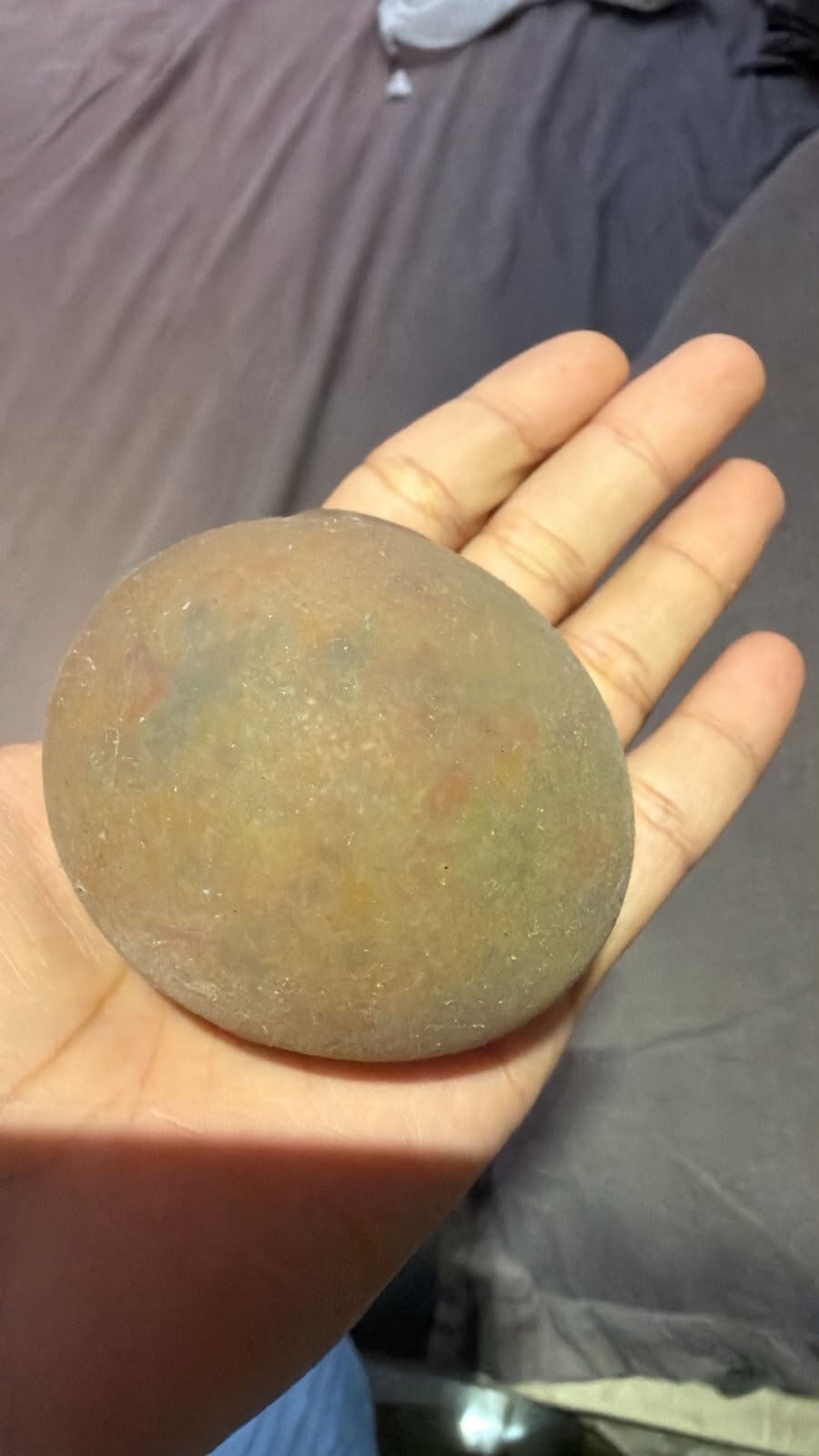
There was an image attached.

She was holding a ball.

Her: I still have that ball.

I read the words again. There was no explanation attached to them, no answer to the questions I had been carrying. I did not know what had led her to send the photograph or what she meant by it. I only knew that, after six days, she had written to me again—and that she still had the ball.

A hand holding the ball shown in her message.
“I still have that ball.”
Open this chapter as a regular story page →